
Description
Before You Specify Aluminum Ceiling Panels, Read the Room
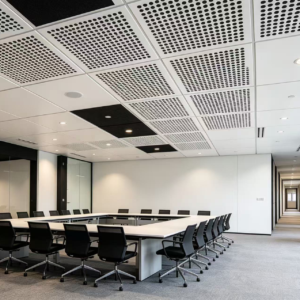
Aluminum Ceiling Panels are the final item to specify. The room sets the rules, so start there and let the use case drive every later choice. A ceiling in a quiet clinic and a ceiling in a busy transit hall solve different problems with the same metal.
Match Aluminum Ceiling Panels to the Space
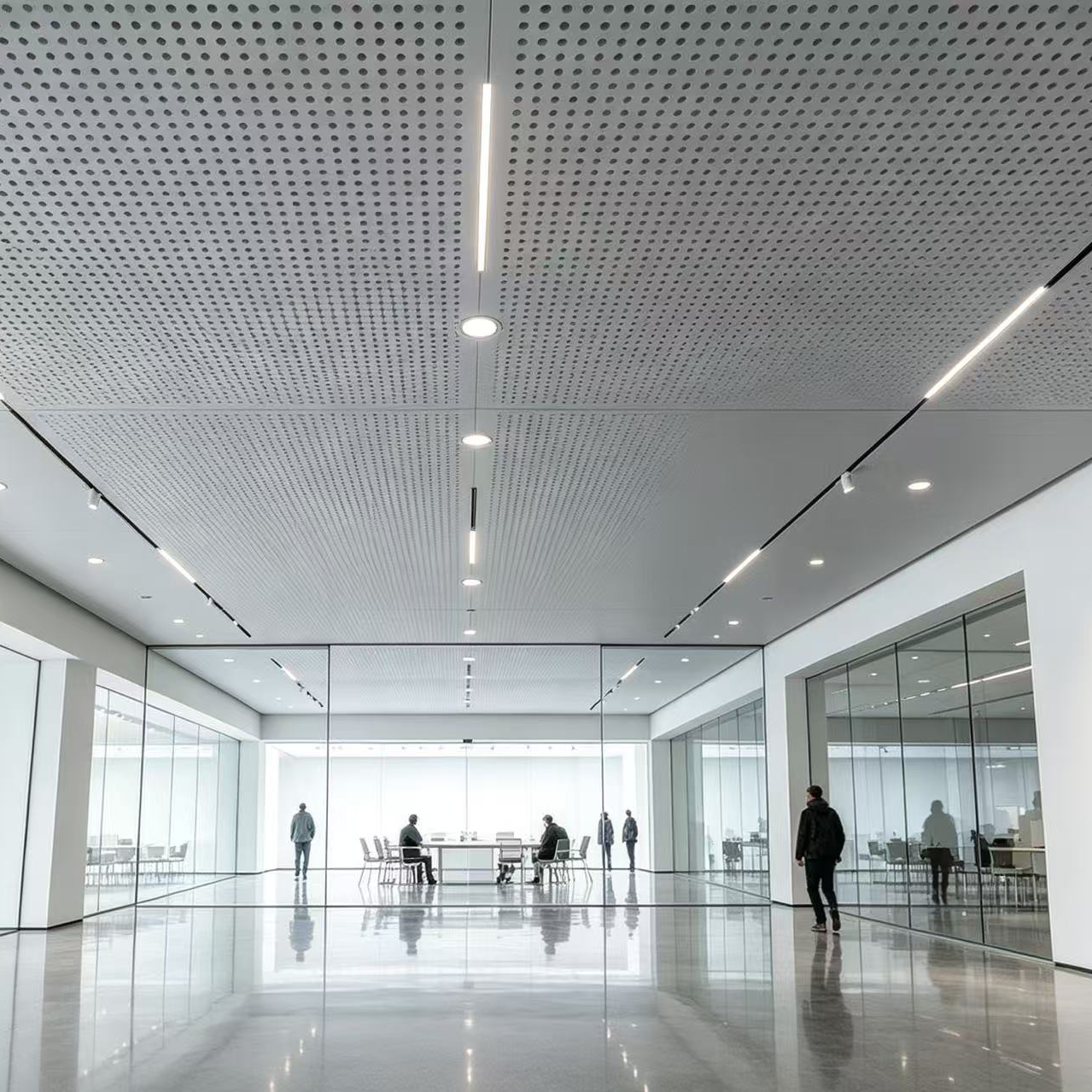
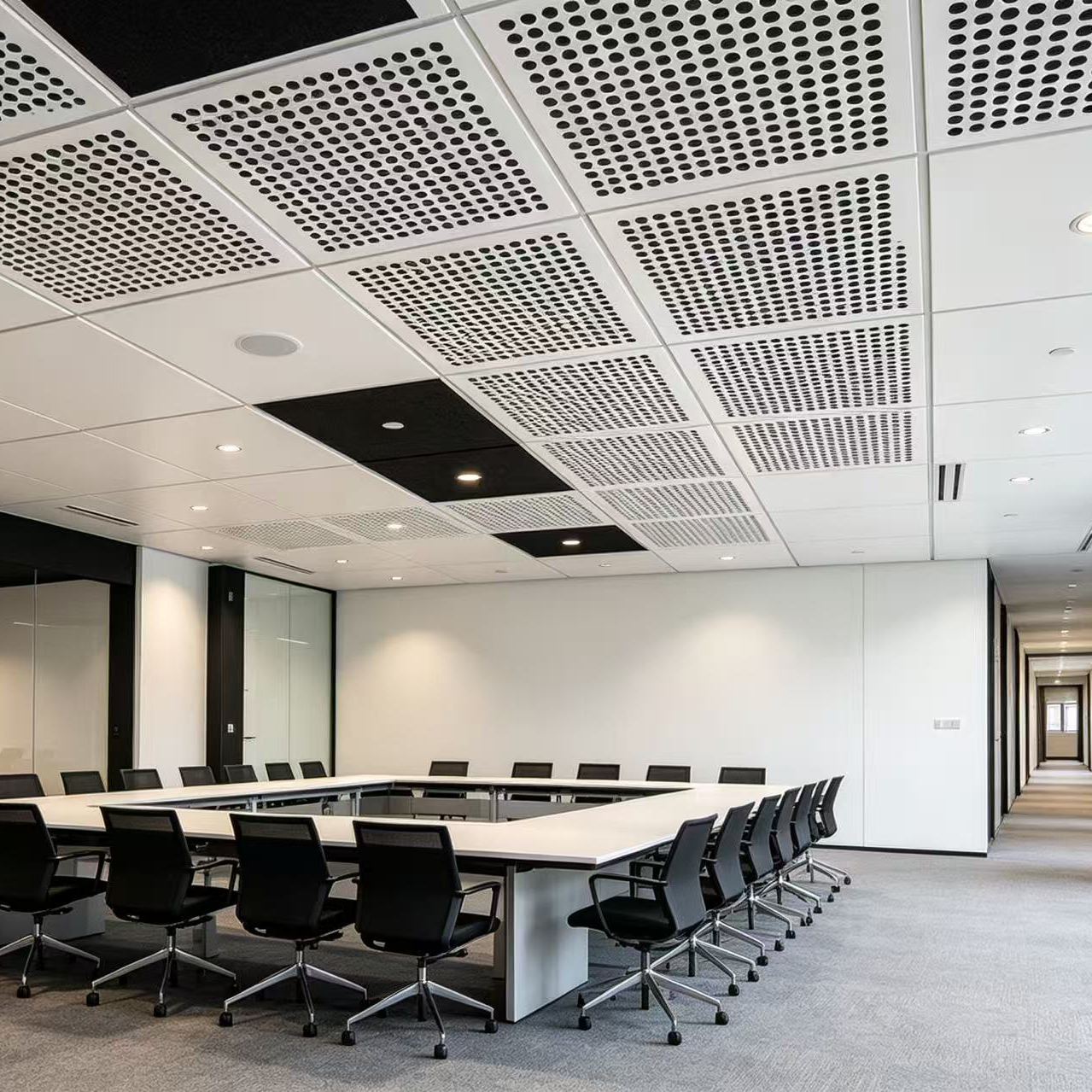
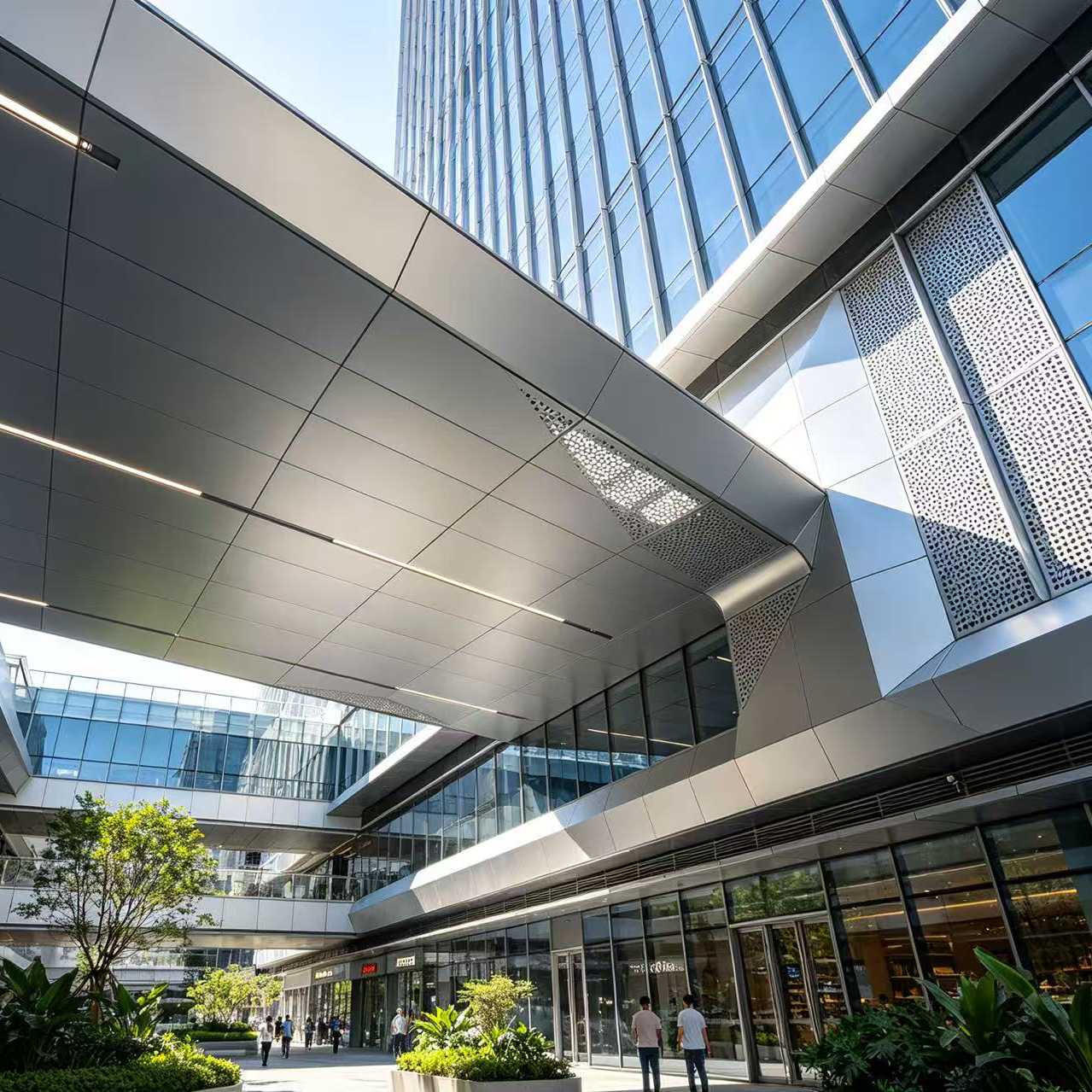
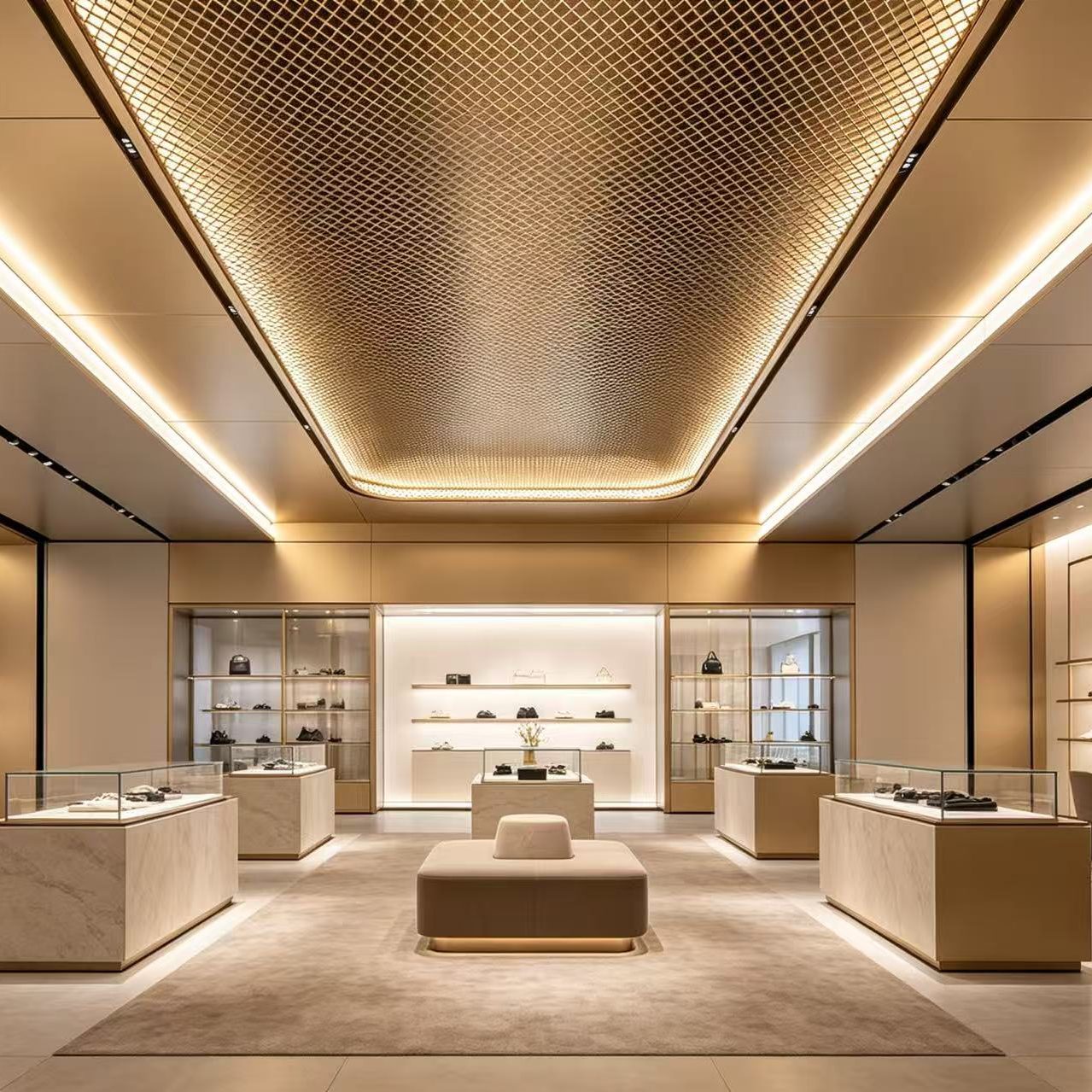
Open offices need sound control first, because echo ruins focus. Retail and hospitality lean on decorative patterns and warm finishes to set a mood under display light. Transit halls and stations need durable, low-upkeep surfaces that still read sharp after millions of passers-by. Kitchens, pools, and bathrooms care most about moisture and mold resistance, where other materials stain or rot. Match the panel to the space before you match it to a color.
Rank Sound, Moisture, and Fire First
Most rooms weigh these three in a clear order. Open and hard-surfaced spaces put acoustics on top. Wet and greasy areas put moisture and hygiene first. Public buildings and escape routes put fire performance high on the list. It settles the alloy, the finish, and the backing in one move.
Pick the Metal and Finish That Fits
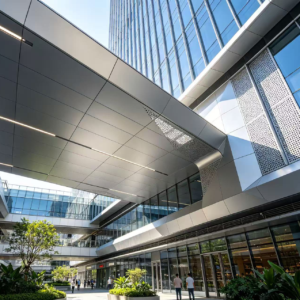
Aluminum gives you a light, stable base, but the face you see is mostly the finish. The trick is to pick the surface to the environment, not to the sample board.
Anodized, Powder, PVDF
For Aluminum Ceiling Panels, anodizing grows a hard oxide layer that protects the metal with no paint film, and it reads smooth and sleek. Powder coating bakes a tough film in a wide color range at a fair cost. PVDF holds bright, saturated shades through years of sun, which suits atriums and glazed lobbies. Brushed finishes add a natural or modern touch without changing the metal underneath. Each route serves a different exposure and budget.
Let the Room Decide the Finish
Bright, sunny atria reward PVDF. Humid back-of-house areas do fine with a solid powder coat. Feature areas where the look carries the brand can take a custom anodized tone. Pick the finish to where the panel lives, because the wrong one fades or chalks while the right one stays put for the building’s life. Where the panel sits matters more than the showroom, so judge the finish in its real light.
Color Matching for Aluminum Ceiling Panels
Most suppliers offer a broad stock range and match a standard chart or a custom shade on request. Custom colors need a sample sign-off, because a screen image never proves a real panel under your own light. Ask for a physical chip and check it in the actual space before the full run cuts, so the color you approve is the color you get.
Specifications
| Standard | GB/T 24001-2016,GB/T 19001-2016, ASTM, JIS, EN |
| Thickness | 0.5mm-10.0mm. |
| Width | 300mm-1850mm, Customized |
| Length | 300mm-3000mm, Customized. |
| Tolerance | ±1%. |
| Material | Aluminum, Stainless Steel, Carbon Steel, Iron etc. |
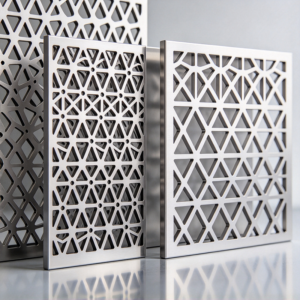
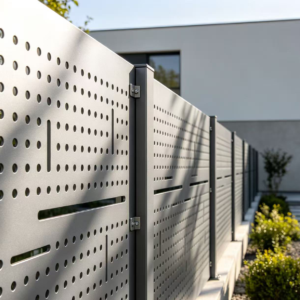
| Process | Expanded, Perforated, Laser Cutting |
| Technique | Cold Rolled. |
| Finish | Galvanized, PVD Coated, Brushed, Satin, Mirror, Sandblasted |
| Colors | Champagne, Black, Blue, Silver, Gold, Rose Gold,etc. |
| Edge | Mill, Slit. |
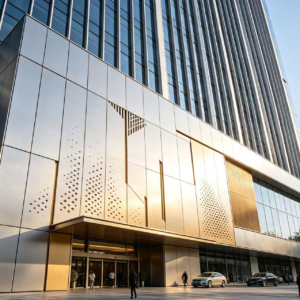
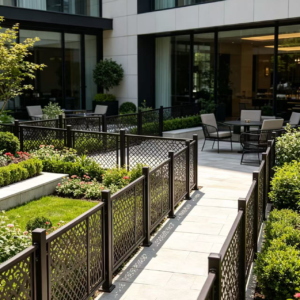
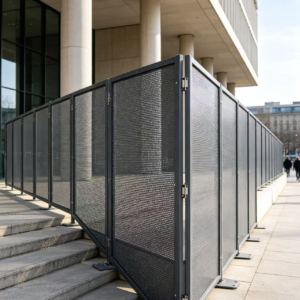
| Applications | Room Divider, Ceiling, Facade, سور, Interior Decorations. |
| Packing | PVC+ Waterproof Paper + Wooden Package. |
Make Aluminum Ceiling Panels Quiet with Perforation
Perforation is the main lever for sound. It opens the face so the ceiling can absorb instead of reflect, and paired with the right backing it turns a hard plane into a quiet one.
Perforation Rate in Aluminum Ceiling Panels
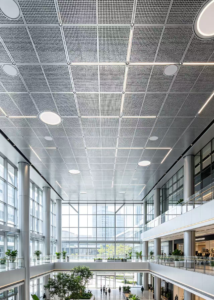
The open area sets how much sound the panel takes, so pattern and pitch drive the result. A higher open rate absorbs more, within the limit of the structure and the look you want. Behind the holes, a layer of acoustic wool does the real work, and the wool weight and the cavity depth matter as much as the holes themselves.
Open Plans Need More Absorption
Large, open floors with little soft furniture build reverberation fast. They need a higher open rate and a proper backing, not just any perforated face. Get the absorption right early, because fixing a loud ceiling after install means pulling panels down.
Install Aluminum Ceiling Panels the Right Way
The install method decides access, flatness, and how the ceiling meets the services above. Choose it with the maintenance crew in mind, not just the first fix.
Drop-in Grid versus Suspended Routes
A drop-in grid snaps panels into a tee system, so any aluminum ceiling panels lifts out for filter and service access. A suspended grid hangs on rods and tees, which levels the plane and hides ductwork and cabling above. Both suit large areas and a small crew, and both keep future work simple because the route is open by design. For spaces with frequent service visits, the open grid pays for itself in saved labor.
Direct-Mount for a Flush Face
Direct-mount clips or bonds the panel straight to the soffit for a clean, flush look with no grid in sight. It saves height in low ceilings and reads minimal, but access to the void above gets harder. Use it where the plane is the point and the services above rarely need a visit. It reads as one calm plane, which suits reception areas and feature ceilings over a lobby.
Reviews
There are no reviews yet.