
Beschreibung
What Welded Steel Grating Is and How It Is Made
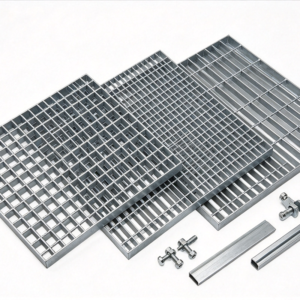
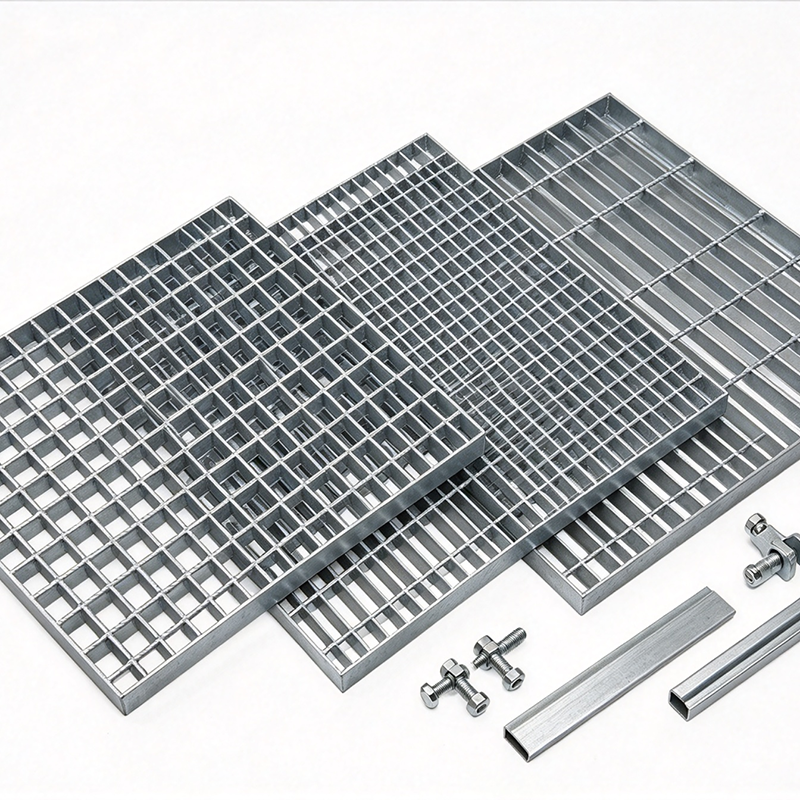
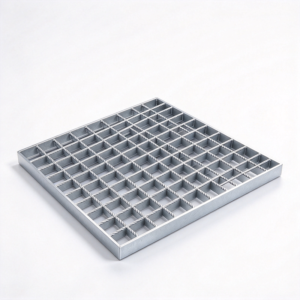
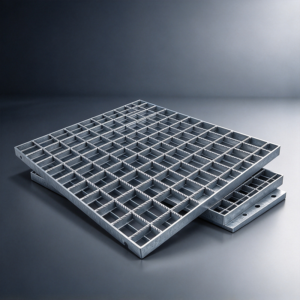
Welded steel grating starts with bearing bars and cross bars. The bearing bars run in the direction of the load. The cross bars sit across them at a regular spacing. A machine welds the cross bars to every bearing bar with heat and pressure, which gives a rigid, one piece panel. This welded bond is why the product stays flat and strong under foot and wheel traffic.
The spacing of the bars sets the open area. Closer bars give a finer look and smaller gaps. Wider spacing cuts weight and cost but lets more pass through the floor. Most plants pick a balance that meets the load while keeping the opening safe for tools and footwear.
The Welded Grating Process
The weld happens at every crossing point, so the panel acts as a single structure rather than loose bars. Automated lines set the pitch and the weld depth, which keeps output consistent across a long run. Because the joint is permanent, the panel holds its shape after cutting, framing, and galvanizing.
Bar Size and Pitch Choices
Bar size and pitch decide stiffness and open area. Thicker bearing bars span farther and carry more, while a tighter pitch reads finer and traps less debris. Confirm the exact sizes with your supplier, because the numbers change with the load class you specify.
Materials and Finishes for Grating
Three metals cover almost every welded steel grating job. The table below compares them on corrosion resistance, best fit, and practical notes.
| Material | Corrosion resistance | Best fit | Practical notes |
| Galvanized carbon steel | Good after hot dip galvanizing | Walkways, platforms, trenches | Strong and low cost; the zinc layer protects the cut edges |
| Stainless steel | High with no coating | Food, pharma, coastal sites | Clean and low upkeep, but higher cost |
| Aluminum | High from its natural oxide layer | Rooftops, vessels, light structures | Lightest option for weight sensitive areas |
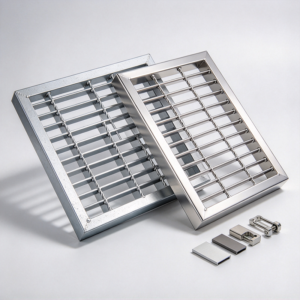
Galvanized Steel Grating
Carbon steel is the default for most welded steel grating because it is strong and cheap. On its own it rusts, so outdoor and wet plants specify hot dip galvanizing after fabrication. The zinc layer protects the steel and the cut edges, which is why galvanized carbon steel dominates walkways and platforms. The hot dip galvanizing process is well documented for corrosion protection.
Stainless and Aluminum Options
Stainless steel grating resists corrosion without coating and stays clean, which suits food, pharma, and coastal sites. It costs more but needs little upkeep. Aluminum grating is light and naturally corrosion resistant, which helps rooftops, vessels, and areas where weight matters.
Where Welded Steel Grating Works Best
Grating for Platforms and Walkways
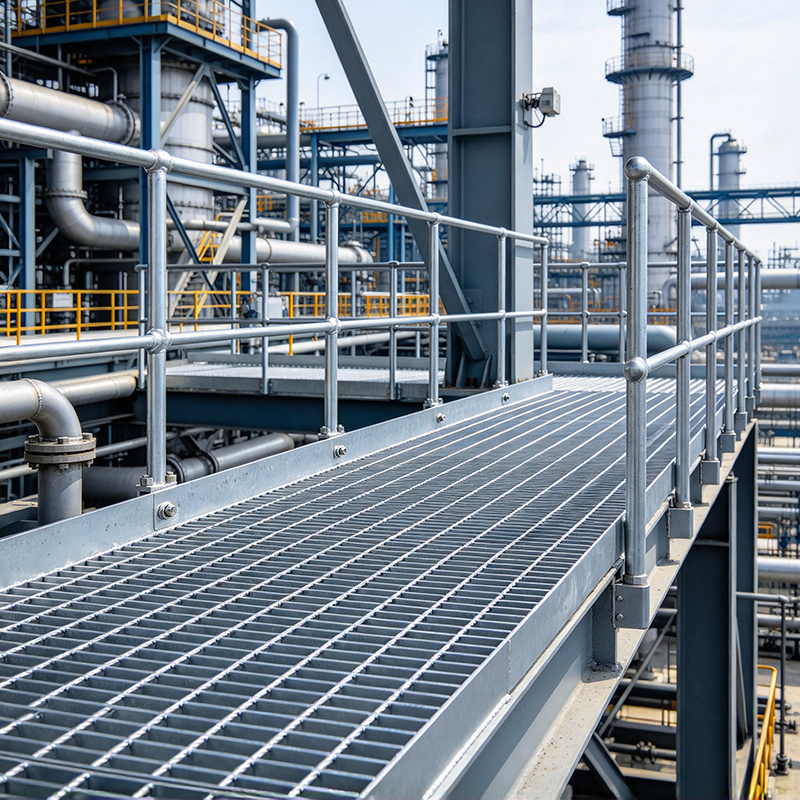
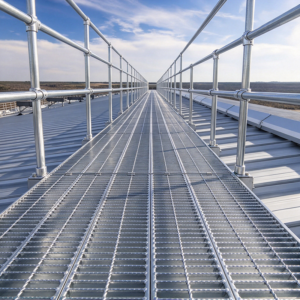
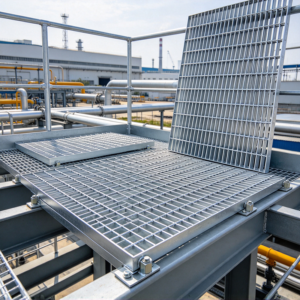
Welded steel grating for platforms and walkways takes constant foot and cart traffic, so it needs a safe walking surface and enough stiffness to span the supports. Many specify a serrated top edge on the bearing bars for grip in oil or rain. The panel should land on a structural support at each end, and the span between supports should match the load class.
Stairs and Treads
Stairs need the same grip with a defined nosing. Most treads use a serrated or checkered front edge and a fixed width that matches the stair stringer. Because a misstep on a stair is worse than on a flat walkway, the slip resistance matters more there.
Trench and Drainage Covers
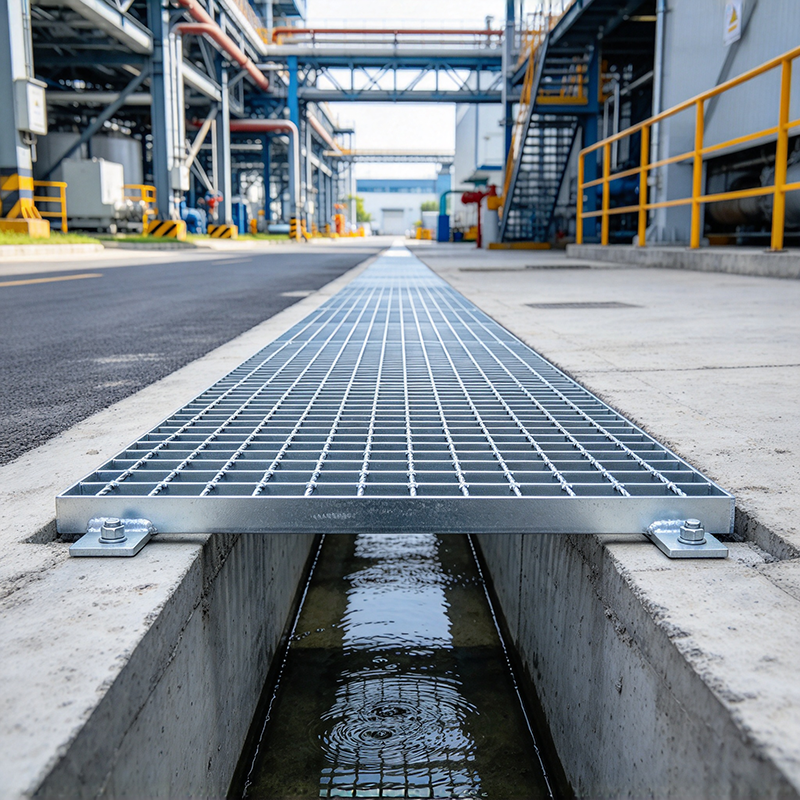
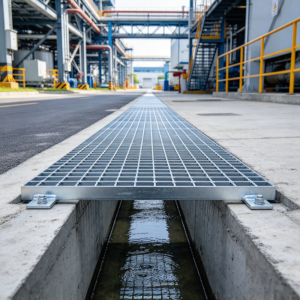
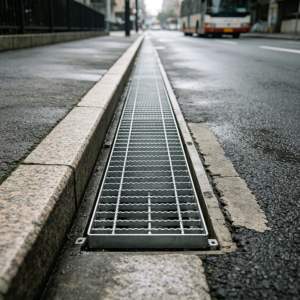
Trench covers sit over channels that carry water, spillage, or cable. They must carry traffic yet open for cleaning. Some use a hinged or lift out frame so crews can service the trench without tools. The cover rating should match the traffic, from foot only to light vehicle.
Load, Span, and Fixing Details That Matter
Load and Span Together
For welded steel grating, load and span are linked. A panel that holds a given weight over a short span may fail over a long one, because the bending grows with the distance between supports. Rather than guess, ask the supplier for the safe load at your span, stated for the bar size and spacing you chose. Typical walking loads differ from wheel or pallet loads, so name the traffic.
Fixing Methods That Hold
Fixing keeps the panel from lifting, sliding, or rattling. Simple clips bolt the panel to the support without welding, which speeds install and avoids heat damage to galvanizing. Welded lugs give a permanent bond where clipping is not enough. For a removable panel, use a hold down that a crew can release by hand. Match the fixing to the load and the access need.
Rezensionen
Es liegen noch keine Bewertungen vor.