

Description
What Galvanized Steel Grating Is
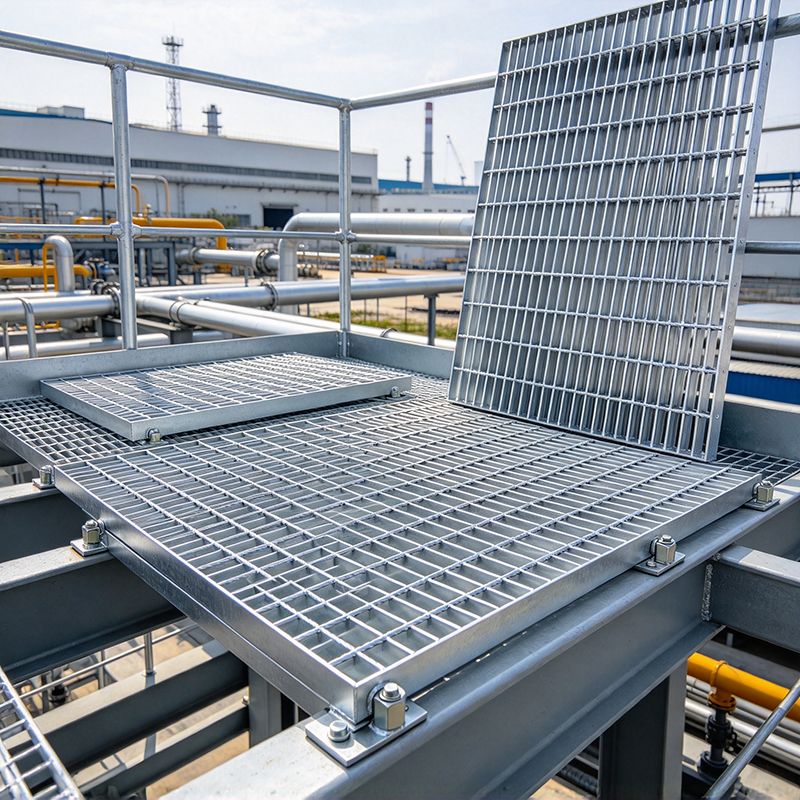
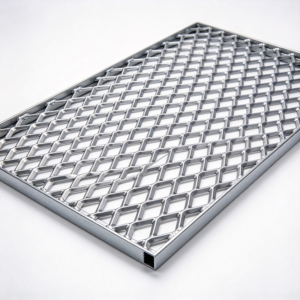
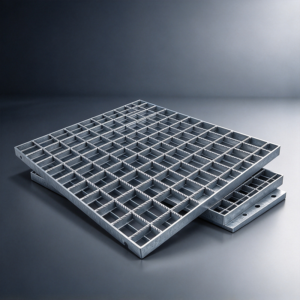
Galvanized steel grating begins as a carbon steel panel made from bearing bars and cross bars. The fabricator cuts and assembles the panel, then passes it through a coating line that bonds zinc to every surface. The result keeps the open mesh and the load capacity of bare steel, and it adds a layer that fights corrosion.
Because the base is a normal steel panel, you still choose the bar size, the pitch, and the panel size to suit the span. Only the surface changes.
How Hot Dip Galvanizing Works
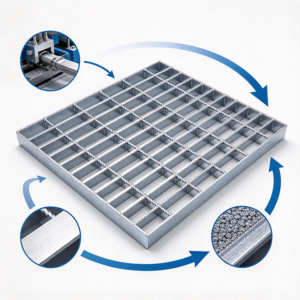
Hot dip galvanizing dips the finished panel into molten zinc. The zinc reacts with the steel surface and forms bonded alloy layers, so the coating becomes part of the metal rather than a film sitting on top. Because the whole panel goes into the bath, the zinc reaches inside the mesh, along the bars, and into the joints. The bath covers the top of the bars, the sides, and the inside of every opening, so no part of the panel is left exposed.
Why the Zinc Coating Protects Steel Grating
Zinc protects steel in two ways. It seals the surface as a barrier, and it also sacrifices itself at small breaks. Where the coating takes a scratch, the surrounding zinc corrodes first and keeps the steel beneath it intact. That second effect is why galvanized panels tolerate the chips and scuffs that normal site traffic causes.
Where Galvanized Steel Grating Performs Best
The finish suits sites where water, salt, or chemicals would attack bare steel. In dry indoor rooms a cheaper finish often does the job. Galvanized panels earn their cost mainly outdoors and in wet service.
Outdoor Platforms and Walkways
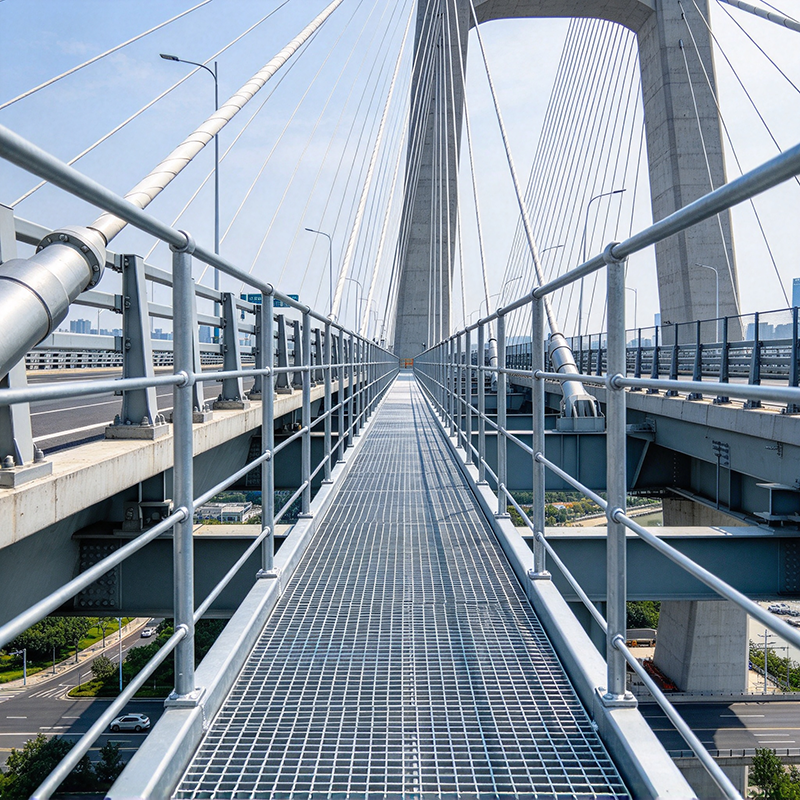
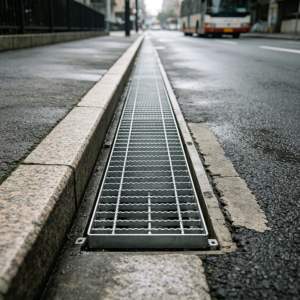
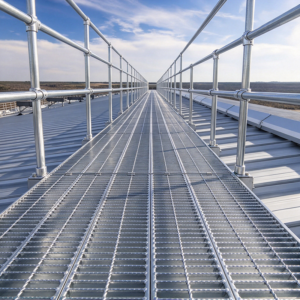
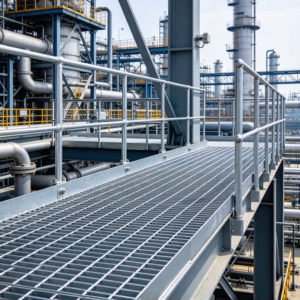
Rain, standing water, and constant foot traffic make outdoor floors hard on bare steel. Galvanized steel grating handles those conditions while it drains the surface and sheds debris. Puddles do not sit on the walkway, and the zinc keeps rust from taking hold at the edges. Where oil or rain makes the surface slick, ask for serrated bearing bars so boots and trolley wheels keep their grip.
Coastal and Marine Sites
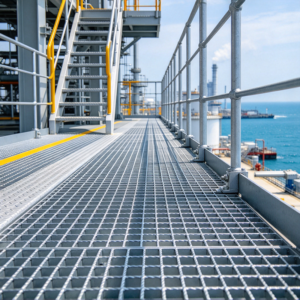
Salt air and salt spray speed up corrosion on unprotected steel. Galvanized panels resist that attack, which is why ports, docks, and seaside plants specify them. For the most aggressive marine service, check with your supplier about a heavier coating or a switch to stainless steel.
Wet and Washdown Areas
Food plants, water treatment works, and chemical sites wash their floors often. Galvanized steel grating stands up to that routine and lets the water run through the mesh instead of pooling. A panel that drains fast also dries fast, which cuts the time that water sits against the zinc. Confirm the chemicals in use with your supplier, because some products need a different finish or grade.
How Galvanized Steel Grating Compares
Galvanized steel is one option among several. The table below sets it against painted carbon steel, stainless steel, and aluminum.
| Finish | Corrosion protection | Best fit | Cost and upkeep |
| Galvanized carbon steel | Zinc coating fights rust and sacrifices itself at small breaks | Outdoor, coastal, wet, and washdown areas | Mid cost; low upkeep over a long life |
| Painted carbon steel | Film barrier only, and it fails where it chips | Dry indoor areas, light traffic | Low cost; needs touch up |
| Stainless steel | High protection with no coating | Food, pharma, heavy marine | High cost; very low upkeep |
| Aluminum | Natural oxide layer, and light weight | Rooftops, vessels, weight limited decks | Mid to high cost; low upkeep |
On cost and life together, galvanized steel grating usually beats stainless on price and beats paint on service life. That balance is why it holds the middle of the market.
Specifying Galvanized Steel Grating
Finish Details to Confirm
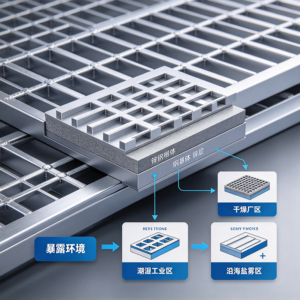
Coating weight and thickness change with the standard and the project. Ask your supplier to state the coating you will receive, and match it to your exposure. Ask whether the fabricator galvanizes the panels after cutting, because that decides if the cut edges carry coating. If you cut a panel later on site, treat the cut edge.
Load, Span, and Fixing
The coating does not change how the panel carries load, so the same rules apply as for any steel grating. Give the supplier your span, your expected traffic, and the bar size and spacing you want. Fix the panels so they cannot lift or slide. Use clips rather than welding where you want to keep the coating intact.
Common Questions About Galvanized Steel Grating
How long does galvanized steel grating last?
Life depends on the coating, the site, and the traffic. A dry indoor floor and a salt spray deck age very differently. Ask your supplier for the expected coating life in your environment rather than a single number.
Is galvanized steel grating the same as stainless steel?
No. Galvanized panels are carbon steel with a zinc coating, so they cost less and suit most outdoor work. Stainless panels resist corrosion through their own alloy, which costs more but needs no coating.
Can galvanized steel grating be cut on site?
Oui, but the cut exposes bare steel. Treat the cut edge with a zinc rich product so corrosion does not start there.
Can galvanized grating be welded?
Oui, but welding burns the coating near the weld. Many projects use clips instead, and any welded area needs repair afterwards.
Avis
Il n'y a pas encore d'avis.