
Description
Industrial Steel Grating
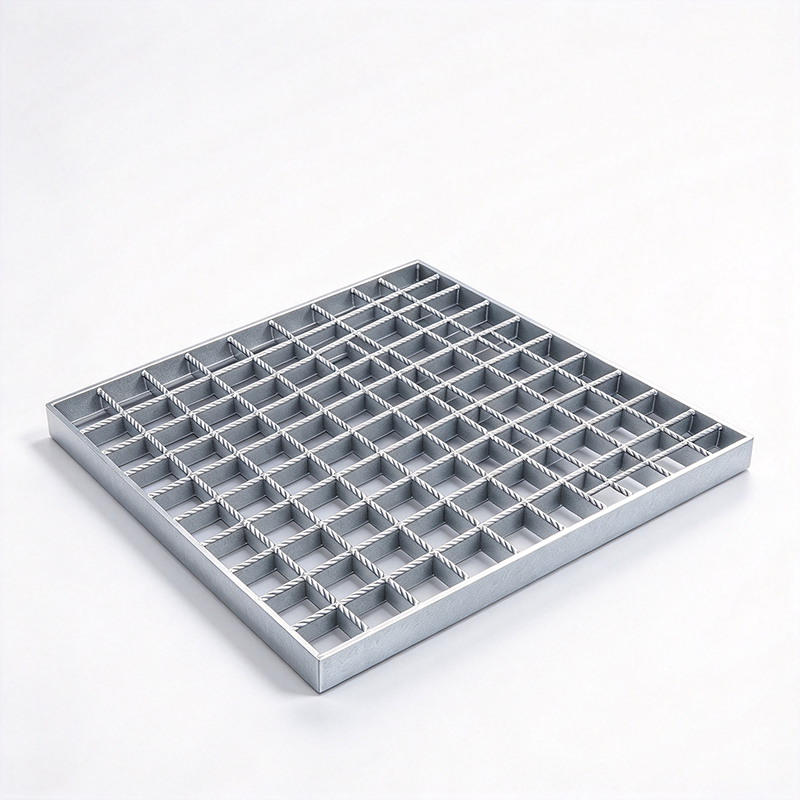
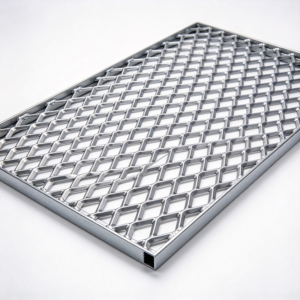
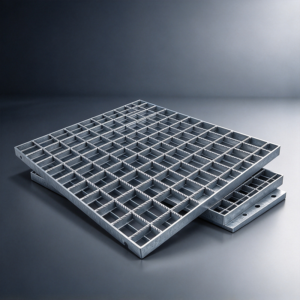
Industrial steel grating is a panel of bearing bars and cross bars joined into an open grid. It carries loads the way solid plate does, but with far less steel. The gaps between bars remove material that is not working. That open design is the source of almost every advantage the product offers.
An Open Floor That Works for the Plant
The gaps are not empty space. They drain water and spills, and they let light and air move through the floor. They also give maintenance crews a clear view of the services underneath. A solid floor hides all of that. An open floor shows it and keeps it dry.
Industrial Steel Grating Construction
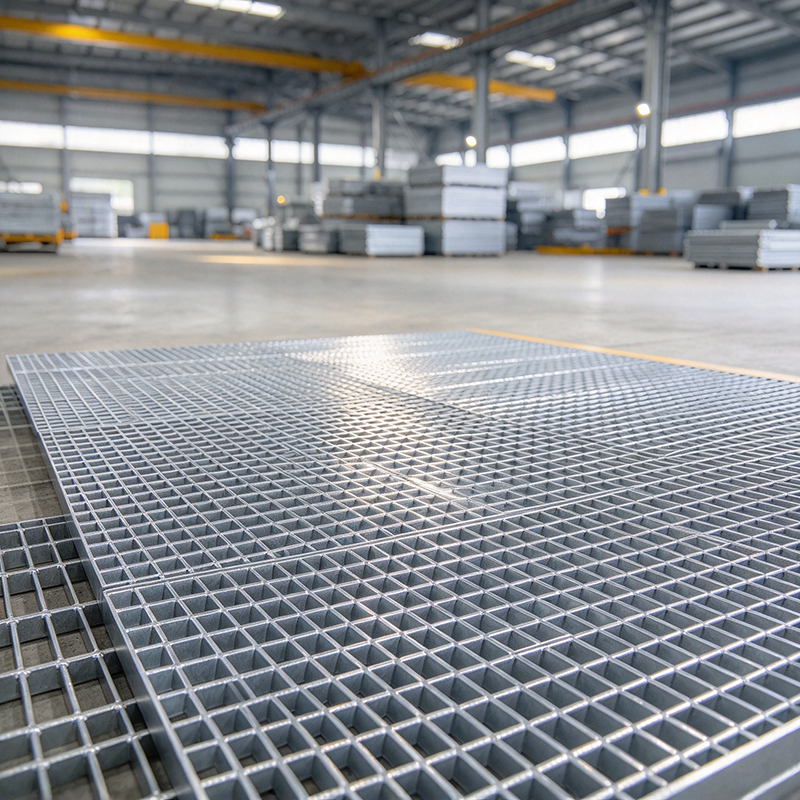
Manufacturers set bearing bars at a fixed pitch, then join cross bars to hold them in line. The joints can use welding, press locking, or riveting, depending on the stiffness and finish the job needs. Bar depth, bar thickness, and pitch set how far the panel can span and how much it will carry.
Open Grating Versus Solid Plate
Solid steel plate is flat and strong, but it holds water, blocks light, and hides what sits below. Industrial steel grating trades a little flatness for a lot of practical value. The table below sets the two side by side.
| Feature | Industrial steel grating | Solid steel plate |
| Drainage | Water and spills fall through the mesh | Puddles until someone cleans them |
| Light and air | Passes through the open bars | Blocked at the floor |
| Slip resistance | Open bars give footwear a grip | Turns slick when wet or oily |
| Weight | Less steel for the same span | Heavier for the same area |
| Access below | See and reach pipes and cable | Must lift full plates to reach |
Drainage, Light, and Air
Water, oil, and process spills drain straight through an industrial floor, so they do not sit underfoot and create a hazard. Light and air pass through the open mesh to the level below. That cuts the need for artificial lighting in some plants and keeps fumes from pooling.
Grip and Slip Resistance on Grating
Open bars give footwear and trolley wheels something to bite. Where a floor stays wet or oily, serrated bearing bars add more grip. That is why washdown areas and process floors specify them over smooth plate. A dry factory still benefits from the open profile.
Access to What Runs Below
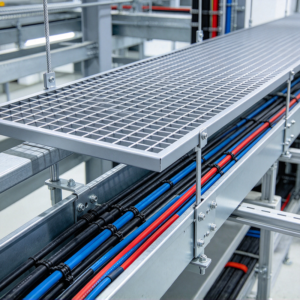
Pipes, cable trays, and machinery often run in the space under a plant floor. Grating lets crews see leaks and damage early and reach them without lifting heavy plates. That access shortens downtime and makes inspection a quick job rather than a lift.
Applications
Platforms, Mezzanines, and Catwalks
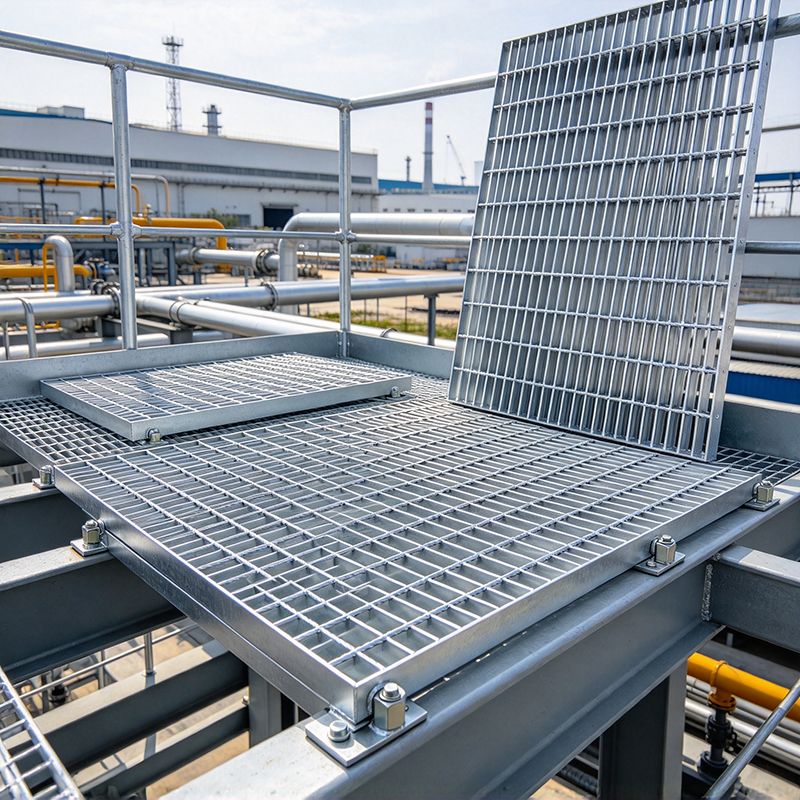
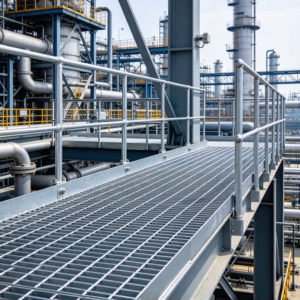
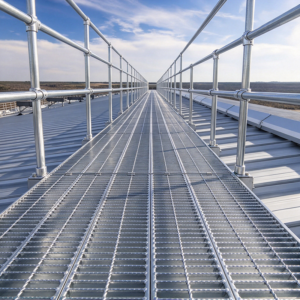
Plants add platforms and mezzanines to use vertical space. Industrial steel grating suits those levels because it is light, quick to fix, and open to the air.
Machine Areas and Process Floors
Around machines, floors take oil, coolant, and dropped tools. Grating drains the liquids and lets small parts fall through rather than become trip hazards. Choose a bar size and finish that match the chemicals and the traffic on that line.
Industrial Grating Stair Treads
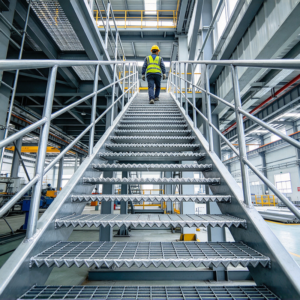
Stairs need the same grip as the floor, with a defined nosing at the front edge. Treads cut from industrial steel grating keep the look and the slip resistance consistent with the walkway. Confirm the tread width and nosing type against your stair stringer.
Choosing the Right Industrial Steel Grating
Material and Finish
Carbon steel is the default for dry indoor plants. Hot dip galvanizing protects it outdoors and in wet areas, and stainless steel covers food, pharmaceutical, and coastal sites. Match the material and finish to the exposure and the cleaning routine, because those two choices set the service life.
Bar Size, Pitch, and Load
Deeper and thicker bearing bars span farther and carry more. A tighter pitch reads finer and stops smaller objects from passing through.
Fixing and Edge Details
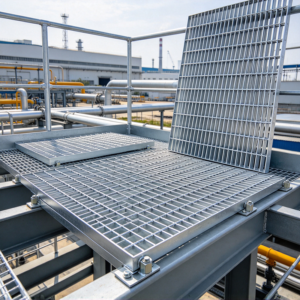
Fix every panel so it cannot lift or slide. Band the edges where a panel meets a wall, a curb, or an opening. The fixing and the banding matter as much as the panel itself. A loose or open edge is where failures start.
Common Questions About Industrial Steel Grating
Why choose industrial steel grating over solid plate?
Grating drains water, passes light and air, and opens the space below for inspection. Plate holds water and hides everything. Unless the floor must be solid for a specific reason, the open option usually wins in a plant.
Does industrial steel grating need a special finish?
Indoors, plain carbon steel often works. Outdoors, in washdown areas, or near the coast, hot dip galvanizing protects the panel and its cut edges. Match the finish to the exposure rather than to cost alone.
Can it carry forklift traffic?
Yes, but state the traffic clearly when you order. A panel sized for foot traffic is different from one sized for wheels. Ask for the load figure at your span for the bar size you plan to buy.
How do you keep it clean?
Sweep or blow out debris, and wash the panels so grit does not grind into the coating. Keep drainage clear, and touch up any coating damage before rust takes hold.
Reviews
There are no reviews yet.